A 3PL quote can look straightforward until you compare it with another provider’s proposal. One company may charge a flat fee per order, while another separates receiving, storage, picking, packing, and shipping. Both may describe their services as affordable, yet their final monthly bills can look very different.
Understanding 3PL Fulfillment Pricing models means looking beyond the headline rate. You need to know what each fee covers, how charges are calculated, and which activities may create additional costs. This guide explains common pricing models, typical fees, and the questions to ask before choosing a provider. If you’re evaluating 3PL & Fulfillment options, the goal is to understand the full cost—not simply find the lowest advertised rate.

How 3PL Fulfillment Pricing Works
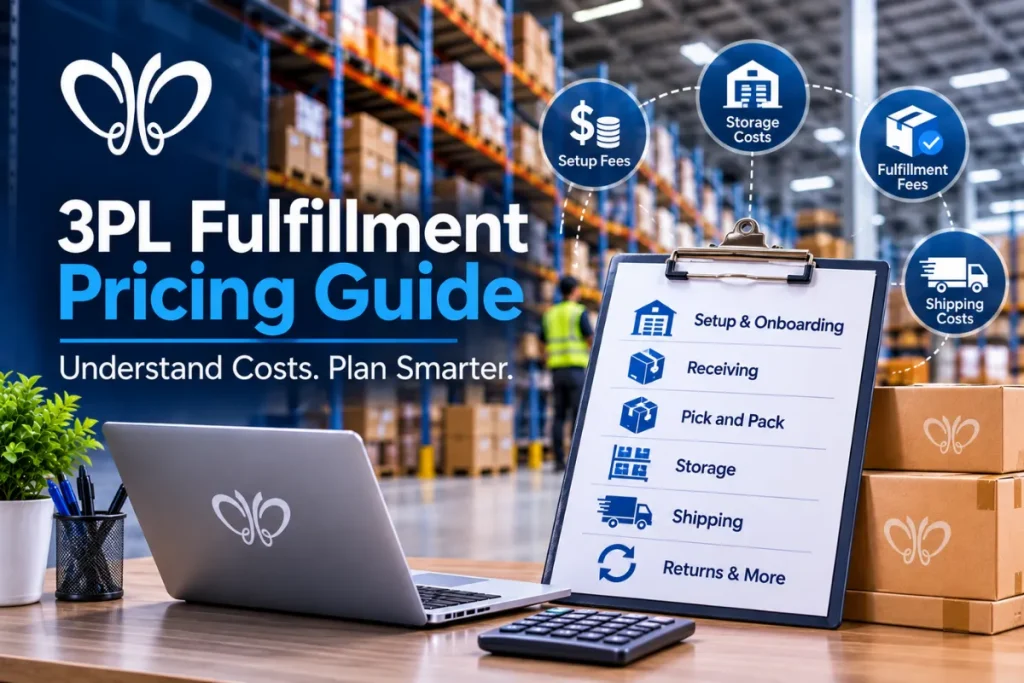
Most providers build their pricing around the work they perform for your business. A quote may include one-time setup charges, recurring storage fees, per-order fulfillment charges, and variable costs such as shipping or special handling.
That is why 3pl fulfillment cost is not always represented by one universal rate. A provider that charges less for picking may charge more for receiving or storage. Another may bundle several activities into one order fee. Compare the complete service and its billing rules rather than focusing on a single line item.
Some providers bundle several services, while others itemize nearly every task. Neither approach is automatically better. What matters is whether the quote clearly explains what is included and when additional charges apply.
Common 3PL Fulfillment Pricing Models
Providers use different 3pl pricing models depending on how clients use their fulfillment services. A model that works for a business shipping a steady number of small orders may not suit a seller with seasonal peaks, bulky products, or irregular inbound shipments.
| Pricing model | How it works | Best for | Watch out for |
| Per-order pricing | A fulfillment charge applies to each order | Predictable order volumes | Check how additional items are billed |
| Per-item pricing | Charges depend on units picked or handled | Consistent order sizes | Multi-item orders can increase costs |
| Receiving-based pricing | Inbound handling is billed by pallet, carton, unit, or labor time | Regular inbound deliveries | Sorting and extra unloading may cost more |
| Storage-based pricing | Charges depend on the space inventory occupies | Businesses holding ongoing inventory | Slow-moving stock creates recurring fees |
| Bundled pricing | Several fulfillment activities are combined into one rate | Businesses seeking simpler billing | Confirm exclusions and surcharges |
| Hybrid pricing | Different billing methods are combined | Businesses with varied workflows | Compare every line item carefully |
A flat rate can make budgeting easier, but it does not necessarily mean every service is included. Itemized pricing may look more complicated while providing a clearer view of what drives the bill. Ask for a sample invoice based on your expected activity.
Typical 3PL Fulfillment Fees
These are common 3pl fulfillment fees to look for in a proposal. Not every provider charges every fee, and the same task may appear under a different name.
| Fee type | What it covers | How it is usually charged |
| Onboarding | Account setup and integrations | One-time charge |
| Receiving | Processing incoming inventory | Per pallet, carton, unit, or hour |
| Putaway | Moving products into storage | Per unit, pallet, or labor time |
| Storage | Space used by inventory | Per pallet, bin, shelf, or cubic foot |
| Pick and pack | Picking products and preparing orders | Per order or item |
| Packaging materials | Boxes, mailers, and protective materials | Per item or material used |
| Shipping | Carrier transportation | Per shipment |
| Returns processing | Receiving and inspecting returned products | Per return or unit |
| Special handling | Kitting, relabeling, and custom preparation | Per task or labor hour |
Receiving and Onboarding Fees
Onboarding covers the work required to prepare an account for operation. This may include configuring the inventory system, connecting sales channels, importing product information, and establishing operating procedures. Ask whether integration, testing, and staff training are included.
Receiving fees apply when inventory arrives. Charges may depend on shipment condition and the work required to process it. Palletized freight with clear labels may be handled differently from mixed cartons that need sorting and counting. Confirm whether unloading, inspection, discrepancy reporting, and putaway are included.
Pick and Pack Fees
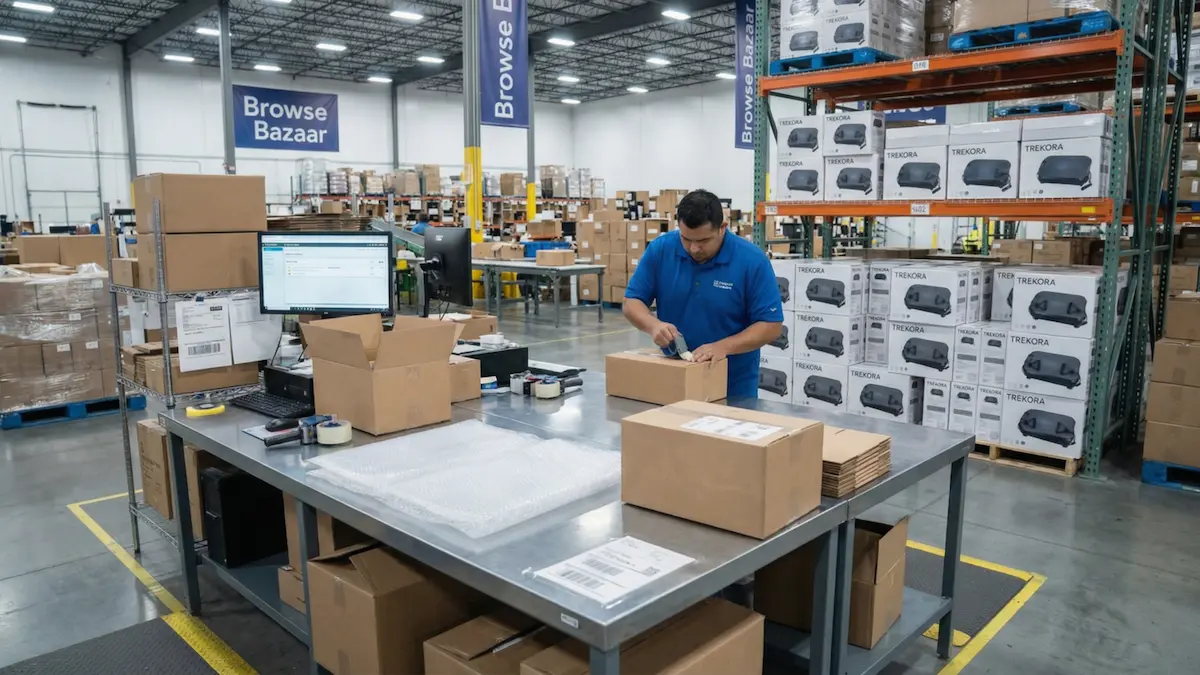
Pick and pack charges cover retrieving products from storage and preparing them for shipment. Some providers charge a base amount for the first item and an additional fee for each extra item. Others use a flat per-order rate.
When reviewing 3pl warehouse pricing per order, use an order profile that reflects your actual business. Include typical units per order, product dimensions, packaging requirements, and special instructions. A rate based on single-item orders may not represent your costs if customers regularly purchase several products together.
3PL Storage Costs
3pl storage costs are generally based on the space inventory occupies and how long it remains in the facility. Providers may bill by pallet, bin, shelf location, or cubic footage.
Ask how inventory is measured, when each billing period begins, and whether partial periods are prorated. Also clarify how slow-moving and seasonal products are billed. Storage charges can continue even when sales are quiet, so estimate the cost of holding your expected inventory—not just the amount you plan to ship.
Shipping and Packaging Costs
Shipping is often a major variable in the total fulfillment bill. Carrier charges can depend on package weight, dimensions, destination, delivery speed, and selected service. A provider may pass through carrier rates, apply an agreed markup, or offer negotiated pricing. Ask which method appears in your agreement.
Packaging may be billed separately from pick and pack labor. Find out whether standard boxes and mailers are included, whether custom packaging costs extra, and how oversized or fragile products are handled. Also ask whether address corrections and other carrier adjustments can be passed through to your account.

What Drives Your 3PL Fulfillment Cost
Your final 3pl fulfillment cost depends on the amount and type of work your inventory and orders require. Important cost drivers include:
- Order volume: Regular order volume may make planning easier, while seasonal peaks can require additional labor or capacity.
- Units per order: Multi-item orders may involve more picking and packing work.
- Product size and weight: Bulky products take up more storage space and may increase shipping charges.
- Inventory turnover: Products that remain in storage longer can generate more recurring fees.
- Inbound shipment condition: Mixed or poorly labeled deliveries may require additional sorting and handling.
- Packaging requirements: Fragile products, custom boxes, and inserts can add material or labor costs.
- Sales channels: Complex workflows and system integrations may require additional setup.
- Returns and special services: Inspection, relabeling, kitting, and other nonstandard tasks may be billed separately.
- Shipping destinations: Delivery zones and service levels influence carrier charges.
A useful estimate should reflect your actual operating pattern. Prepare sample order data and inventory details before requesting a quote. A rough description of your business may leave important cost assumptions unresolved.
Hidden Costs to Watch For
A low headline rate can be misleading if the quote leaves out tasks your business regularly needs. Some providers charge separately for account setup, software integrations, minimum monthly activity, or inventory receiving. Others may add fees for special handling, inventory counts, packaging materials, returns processing, and shipment corrections.
Storage-related surcharges deserve particular attention. Long-term inventory, seasonal peaks, or products that occupy more space than expected may increase the bill. You should also clarify whether account management, reporting, inventory removal, and contract termination involve additional charges.
These fees are not necessarily unreasonable. They become a problem when their conditions are unclear or they appear unexpectedly on an invoice. Ask the provider for a complete fee schedule, including charges that apply only in specific situations. It is also useful to request a sample invoice showing both routine activity and less common services, such as processing a return or sorting a mixed inbound shipment.
If a provider describes a charge as variable or says it applies only when needed, ask what triggers it, how it is calculated, and whether you will be notified before the work is performed. Having these terms documented makes it easier to forecast expenses and compare proposals fairly.
How to Compare 3PL Quotes
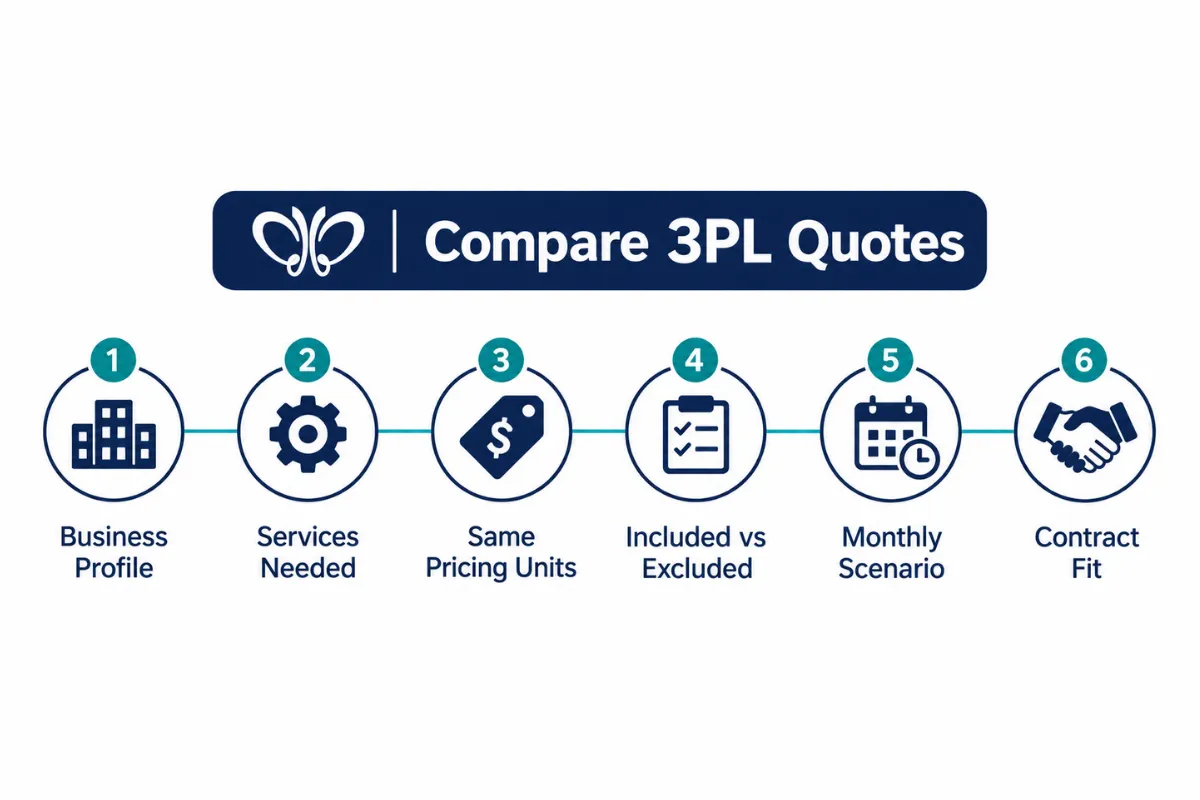
Comparing third party fulfillment pricing takes more than placing two per-order rates side by side. Use the same assumptions for every provider so the differences are meaningful.
- Prepare a consistent business profile. Share monthly order volume, average units per order, product dimensions and weights, SKU count, inventory levels, inbound frequency, and sales channels.
- List the services you need. Specify receiving, storage, picking, packing, shipping, returns, labeling, kitting, and other recurring tasks. Do not compare a full-service proposal with one covering only basic fulfillment.
- Normalize the pricing units. Compare storage using the same inventory quantity and period. Compare order fees using the same number of units per order.
- Check what is included and excluded. Review packaging, integrations, account support, reporting, minimums, surcharges, and special handling. Ask for unclear terms in writing.
- Build a realistic monthly scenario. Apply each provider’s rates to your expected orders, inventory, inbound shipments, and returns. Include seasonal peaks when relevant.
- Review operational fit and contract terms. Confirm service expectations, communication procedures, billing frequency, rate changes, notice periods, and inventory removal costs.
Final thoughts
The best way to evaluate 3PL Fulfillment Pricing models is to understand the full cost of the work your business needs. Look beyond the advertised per-order rate and examine receiving, storage, picking, packing, shipping, returns, and additional charges.
Compare proposals using the same order volume, inventory profile, and service requirements. This gives you a more realistic picture of what you may pay and helps prevent surprises after operations begin.
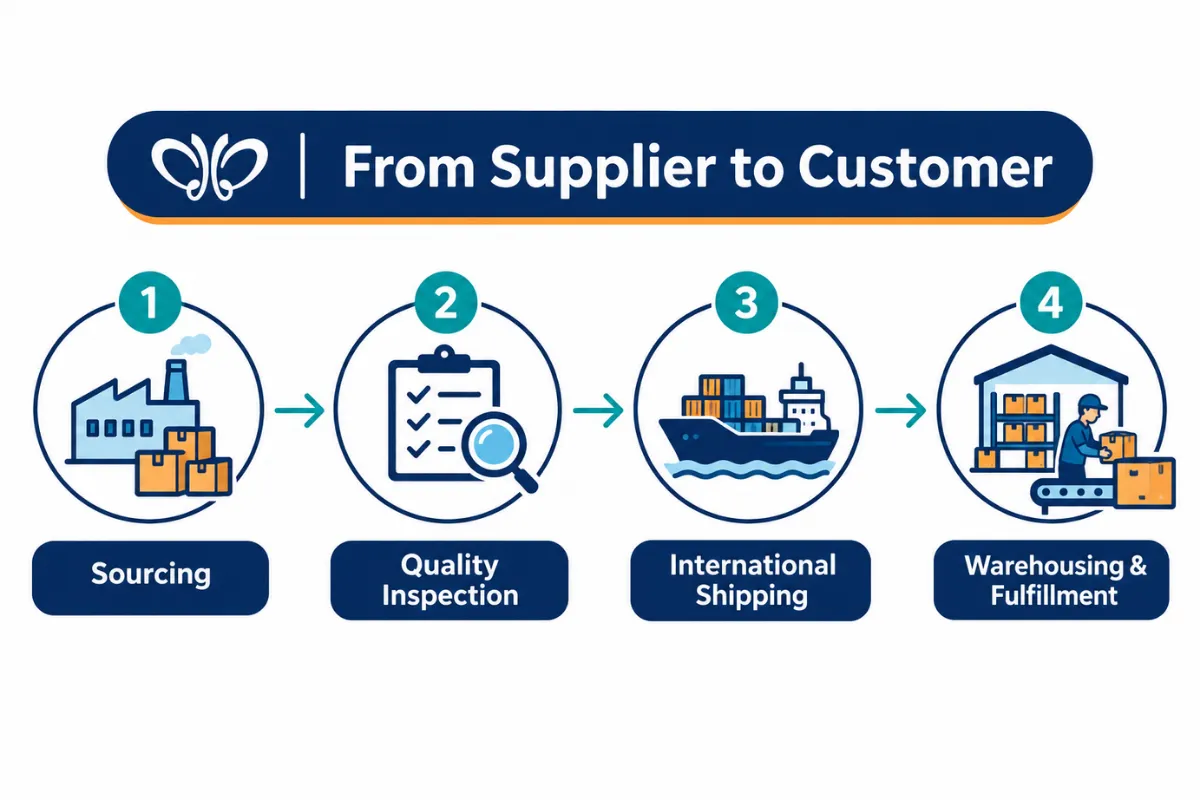
If your business also needs help coordinating product sourcing and logistics, Browse Bazaar can help you explore available supply chain services. Discuss your requirements, confirm the exact service scope, and request a quote based on your actual workflow rather than a headline price.