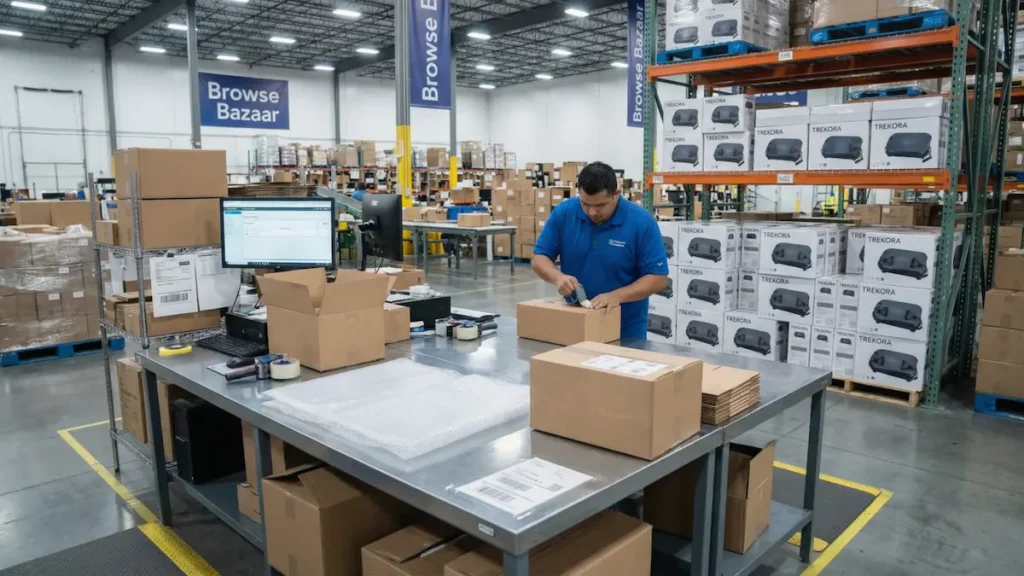
Running a business means managing much more than selling a product. Once customers start placing orders, you also need to receive inventory, store products, track stock, pick and pack orders, arrange shipping, process returns, and keep everything moving efficiently.
For many growing businesses, handling all of this in-house becomes time-consuming and expensive. That’s where 3PL fulfillment comes in.
A third-party logistics provider, commonly called a 3PL, handles part or all of your logistics and fulfillment operations on your behalf. Instead of building your own warehouse and managing every order yourself, you work with a logistics partner that provides the infrastructure, services, and operational support your business needs.
In this guide, you’ll learn what 3PL fulfillment means, how it works, what services a 3PL provider can offer, when a business should consider using one, and what to look for when choosing a provider.
What Does 3PL Mean?
3PL stands for third-party logistics.
A 3PL company provides logistics services for businesses that don’t want to manage their entire supply chain internally.
Depending on the provider and your needs, those services can include:
- Warehousing and storage
- Inventory management
- Order fulfillment
- Picking and packing
- Kitting and bundling
- Shipping and distribution
- Returns management
- Reverse logistics
The idea is simple: instead of managing every logistics operation yourself, you outsource those activities to a specialized partner.
For example, an online business might purchase products from a manufacturer, send the inventory to a 3PL warehouse, and have the 3PL store the products and fulfill customer orders as they come in.
What Is 3PL Fulfillment?
3PL fulfillment is the process of outsourcing your inventory storage and order fulfillment operations to a third-party logistics provider.
A 3PL fulfillment provider can receive your inventory, store it in a warehouse, process incoming orders, pick the correct products, pack them, arrange shipping, and provide tracking information.
This allows you to focus more of your time on areas such as:
- Product development
- Marketing
- Sales
- Customer relationships
- Business growth
Instead of building your own fulfillment operation, you use an existing logistics infrastructure.
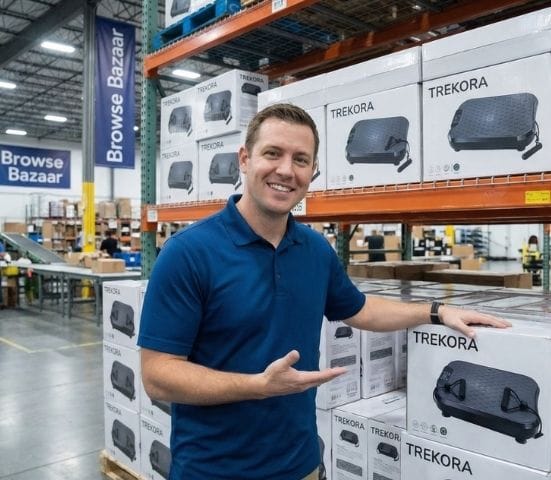
Businesses looking for a full-service option can also explore Browse Bazaar’s 3PL and fulfillment services.
How Does 3PL Fulfillment Work?
Although the exact process varies between providers, a typical 3PL fulfillment workflow looks like this:
1. Inventory Is Received
Your products are shipped to the 3PL warehouse.
The warehouse receives the inventory and records the products in its system so your stock can be tracked.
2. Products Are Stored
Your inventory is organized and stored in the warehouse until an order is placed.
Depending on your business, a 3PL may handle different product sizes, quantities, SKUs, and storage requirements.
3. A Customer Places an Order
When a customer purchases something through your sales channel, the order is sent to the fulfillment operation.
Many 3PL providers integrate with e-commerce and marketplace platforms so orders can move through the system with less manual work.
4. The Order Is Picked
A warehouse worker locates the products included in the order and picks them from inventory.
This is commonly called order picking.
5. The Order Is Packed
The selected products are packaged for shipment.
Depending on your requirements, this can include custom packaging, inserts, bundling, labeling, or other fulfillment instructions.
6. The Order Is Shipped
The package is handed to the appropriate carrier and sent to the customer.
Shipping options can vary based on destination, package size, delivery requirements, and cost.
7. The Shipment Is Tracked
Tracking information is provided so you and your customer can follow the shipment.
8. Returns Are Processed
When a customer returns an order, the 3PL can also support the return process, depending on the services you’ve selected.
This can include receiving returned inventory, inspecting products, updating inventory records, and coordinating the next step.
What Services Does a 3PL Provider Offer?
Not every 3PL provider offers exactly the same services, but a full-service provider can support multiple parts of your logistics operation.
| Service | What It Does |
|---|---|
| Warehousing & Storage | Stores your inventory until it is needed. |
| Order Fulfillment | Processes customer orders from order receipt through shipment. |
| Pick & Pack | Picks products and prepares them for shipment. |
| Kitting & Bundling | Combines products into kits, bundles, or customized orders. |
| Inventory Management | Helps track inventory levels and product movement. |
| Distribution | Coordinates the movement of products to customers or other locations. |
| Returns Management | Handles returned products and related processing. |
| Reverse Logistics | Manages the movement of products back through the supply chain. |
The advantage of working with a provider that offers multiple services is that you can reduce the number of separate logistics partners your business has to coordinate.
When Should a Business Use a 3PL?
A business doesn’t have to reach a certain revenue level before using a 3PL.
The right time depends on your operations, order volume, available space, team capacity, and growth plans.
You may want to consider a 3PL when:
Your Inventory Is Taking Over Your Space
Storing products in your home, office, garage, or another limited location can become difficult as inventory grows.
Your Team Is Spending Too Much Time Packing Orders
If employees who should be focused on sales, marketing, or customer service are spending hours every day fulfilling orders, outsourcing may make sense.
Your Order Volume Is Increasing
As order volume grows, fulfillment can become more difficult to manage manually.
You Want to Expand Into New Markets
A logistics partner can help you store inventory closer to customers and manage fulfillment in different markets.
You Want to Avoid Building Your Own Warehouse Operation
Running an in-house fulfillment operation requires space, equipment, systems, labor, and ongoing management.
A 3PL lets you use an existing fulfillment infrastructure instead.
In-House Fulfillment vs. 3PL Fulfillment
With in-house fulfillment, your business manages the warehouse, inventory, picking, packing, and shipping itself.
With 3PL fulfillment, those logistics operations are handled by an external provider.
| In-House Fulfillment | 3PL Fulfillment |
|---|---|
| You manage warehouse operations. | A 3PL manages warehouse operations. |
| You need your own storage space. | You use the provider’s warehouse. |
| You manage fulfillment staff. | The provider manages fulfillment operations. |
| You manage shipping processes. | The provider coordinates fulfillment shipping. |
| More operational responsibility. | Less day-to-day fulfillment work. |
| Greater direct control. | Greater outsourcing and flexibility. |
Neither option is automatically better for every business.
The right choice depends on your order volume, products, resources, growth strategy, and how much operational responsibility you want to keep internally.
What Are the Benefits of Using a 3PL?
A good 3PL relationship can provide several advantages.
Save Time
Outsourcing fulfillment can free your team from repetitive warehouse and shipping tasks.
Reduce Operational Complexity
Instead of managing storage, picking, packing, shipping, and returns on your own, you can coordinate these activities through one logistics partner.
Scale More Easily
As your business grows, your fulfillment operation can grow with it rather than requiring you to immediately build your own warehouse infrastructure.
Improve Fulfillment Operations
A specialized provider has systems and processes built specifically around logistics and order fulfillment.
Focus on Your Business
Your team can spend more time on product development, marketing, sales, and customer relationships instead of daily warehouse operations.
How Much Does 3PL Fulfillment Cost?
There is no single price for 3PL fulfillment.
The total cost depends on factors such as:
- Number of SKUs
- Inventory volume
- Storage requirements
- Number of monthly orders
- Number of items per order
- Pick and pack requirements
- Packaging requirements
- Kitting or bundling
- Shipping destinations
- Returns volume
- Additional services
Some providers charge separate fees for storage, receiving, picking, packing, shipping coordination, returns, and other services. Others package certain services together.
The most useful way to compare 3PL providers is to look at the total fulfillment cost for your specific operation, rather than comparing one fee in isolation.
For example, a provider with a lower storage fee may not necessarily be less expensive overall if its fulfillment, receiving, or additional service fees are higher.
How to Choose a 3PL Provider
Choosing the right 3PL is an important decision because your fulfillment partner becomes part of your customer experience.
Here are some important factors to consider.
1. Location
Consider where the provider’s warehouses are located relative to your suppliers and customers.
2. Services
Make sure the provider can handle the services you actually need, such as warehousing, fulfillment, kitting, returns, or reverse logistics.
3. Technology
Look for inventory visibility and integrations that work with your sales channels and business systems.
4. Flexibility
Your business may grow or change. A good provider should be able to adapt to changes in order volume, products, and fulfillment requirements.
5. Pricing Transparency
Ask how storage, fulfillment, receiving, returns, and additional services are charged.
6. Customer Support
When something goes wrong with an order or shipment, you need a partner that can respond quickly.
7. Operational Fit
Not every 3PL is designed for every type of business. Make sure the provider understands your products, order volume, customers, and fulfillment requirements.
Can a 3PL Help With International Orders?
Yes. Depending on the provider’s network and services, a 3PL can support businesses selling to customers in different countries.
International fulfillment can involve additional considerations such as:
- Shipping destinations
- Carrier selection
- Customs
- Duties and taxes
- Product requirements
- Returns
- Inventory positioning
For businesses selling internationally, it can be useful to work with a partner that understands both the logistics and operational requirements involved in moving products across borders.
Why Work With Browse Bazaar for 3PL & Fulfillment?
Browse Bazaar provides end-to-end 3PL and fulfillment services designed to help businesses simplify their supply chain.
Its services include:
Warehousing & Storage
Store your inventory and keep your products organized and ready for fulfillment.
Order Fulfillment
Process customer orders and move them from inventory to shipment.
Pick & Pack
Pick the right products and prepare orders for delivery.
Kitting & Bundling
Combine products into kits or bundles based on your business requirements.
Returns Management
Support the handling and processing of returned products.
Reverse Logistics
Manage the movement of products back through the supply chain.
Distribution
Coordinate the movement of products to customers and other destinations.
Browse Bazaar works with businesses that need a flexible supply chain partner rather than another disconnected service provider.
Instead of coordinating every part of your logistics operation separately, businesses can use Browse Bazaar to connect sourcing, logistics, warehousing, fulfillment, and delivery through one supply chain solution.
Does Your Business Need a 3PL?
If fulfillment is becoming difficult to manage, your inventory is growing, or your team is spending too much time handling logistics, it may be time to consider outsourcing.
A 3PL can help take the operational burden off your team while giving your business access to warehousing, fulfillment, and logistics support without building everything from scratch.
The right provider should fit your business, not force your business into a rigid fulfillment model.
Browse Bazaar provides supply chain support built around your products, operations, and growth plans.
Need help figuring out whether 3PL fulfillment is right for your business?