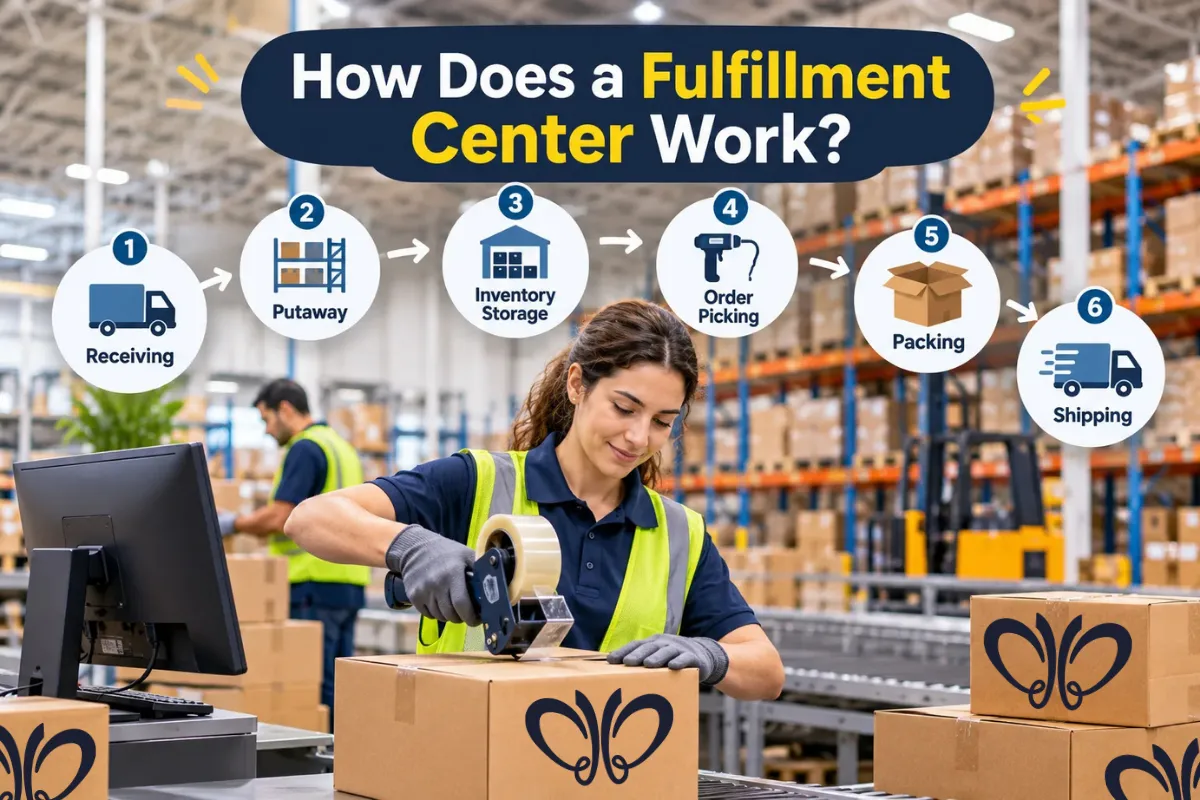
Choosing a third-party logistics provider can have a direct impact on your operating costs, delivery performance, and ability to grow. The wrong choice may lead to inventory discrepancies, missed shipping deadlines, unexpected fees, or a difficult transition at a time when your business needs reliable fulfillment support. A polished sales presentation does not necessarily mean a provider can handle your products, order patterns, or customer expectations.
The goal is not simply to find a warehouse with available space. You need a 3PL fulfillment partner whose systems, processes, service levels, and commercial terms fit the way your business operates today and can support its future needs. A structured evaluation helps you make that decision based on evidence rather than sales promises.
This guide walks through the key decisions involved in selecting a 3PL fulfillment partner, from identifying your operational needs and evaluating provider capabilities to reviewing contract terms and planning a smooth transition. By following a structured process, you can compare potential partners more effectively, identify risks before committing, and choose a provider that fits your business requirements.

What to Know Before Choosing a 3PL Partner
Before contacting providers, document what your business actually needs. Otherwise, proposals may be based on different assumptions, making them difficult to compare. Choosing the right provider means looking beyond the services listed in a proposal and understanding how well they fit your day-to-day operations.
Use this preparation checklist to establish a common starting point:
- Product profile: List your products, dimensions, weights, packaging needs, handling requirements, and any special storage conditions. Note fragile, oversized, high-value, or regulated items that may require additional procedures.
- Order volume: Estimate average daily and monthly orders, peak-season volume, typical units per order, and expected growth. Include both normal weeks and your busiest periods.
- Sales channels: Identify every channel the 3PL must support, such as your ecommerce store, online marketplaces, wholesale accounts, or retail replenishment.
- Service expectations: Define order cutoff times, desired processing speed, delivery options, returns requirements, and the level of customer support your team expects.
- Inventory profile: Estimate the number of SKUs, average stock on hand, inbound shipment frequency, and how often products need replenishment or cycle counts.
- Technology needs: List the ecommerce platforms, marketplaces, ERP, inventory tools, and shipping systems that must exchange data with the provider.
- Geographic requirements: Consider where your customers are concentrated, where suppliers ship from, and whether one or multiple fulfillment locations make operational sense.
- Budget and constraints: Set a realistic fulfillment budget and identify non-negotiable requirements, such as reporting access, insurance documentation, or specific shipping services.
Separate essential requirements from preferences. Accurate inventory records and dependable order processing may be mandatory, while a particular dashboard layout may simply be convenient. This distinction helps your team avoid overlooking a serious operational gap because a sales proposal is attractive.
You should also decide what success will look like after the transition. Choose measurable outcomes such as inventory accuracy, order processing time, shipping accuracy, and how quickly the provider resolves exceptions. These become the basis for comparing proposals and reviewing performance after launch.
Key Factors in Choosing a 3PL Fulfillment Partner
A strong 3PL fulfillment provider should be evaluated across the full operation, not on price or warehouse location alone. The following criteria can help your team compare providers consistently.
| Factor | What to evaluate | Questions to ask |
| Relevant experience | Experience with products, order profiles, sales channels, and business models similar to yours | What types of products and clients do you regularly handle? Can you explain a comparable operation? |
| Warehouse operations | Receiving, putaway, storage organization, picking, packing, cycle counting, and exception handling | How are inbound shipments checked? How are misplaced or damaged units investigated? |
| Order accuracy and speed | Processes for picking, packing, order verification, and meeting agreed cutoff times | How do you measure accuracy and processing time? How are errors reported and corrected? |
| Technology and integration | Compatibility with your ecommerce platform, marketplace, inventory system, and reporting needs | Which integrations are available? What happens when a connection fails or data does not sync? |
| Capacity and scalability | Ability to manage volume fluctuations, seasonal peaks, new SKUs, and growth | How do you plan labor and space for peak periods? What limits could affect our account? |
| Shipping capabilities | Carrier options, service levels, tracking, packaging, and shipping exception management | How are carrier services selected? Who handles delayed, lost, or damaged shipments? |
| Returns handling | Return authorization, inspection, restocking, disposition, and reporting | Can returns be processed according to our rules? How are returned units classified? |
| Communication and support | Account ownership, escalation paths, reporting cadence, and response expectations | Who will manage our account? How do we escalate an urgent operational issue? |
| Pricing transparency | Included services, variable charges, minimums, surcharges, and billing details | Can you provide a complete rate card and sample invoice based on our forecast? |
| Risk management | Security, business continuity, insurance, facility controls, and documented procedures | What safeguards and contingency plans are in place? What documentation can you share? |
Do not accept broad claims such as “99% accuracy” or “same-day fulfillment” without asking how the provider defines and measures them. Find out which orders are included in the calculation, how exceptions are treated, and whether the measurement appears in regular reporting. A metric is useful only when both parties understand what it means.
The provider’s experience should also match your product’s practical requirements. A company that primarily handles small, standard parcels may not be the right choice for fragile goods, products with multiple components, or orders requiring special packaging. Ask for examples of relevant workflows rather than relying on a general client list.
Pricing deserves the same level of scrutiny. Compare the complete cost structure, including receiving, storage, pick and pack, packaging materials, shipping, returns, account minimums, and additional services. The lowest headline rate may not represent the lowest total cost.
How to Evaluate and Compare Providers
Once you know what your operation requires, use the same process for each candidate. Consistent questions and assumptions make it easier to identify meaningful differences.
- Create a shortlist based on operational fit. Start with providers that appear capable of handling your products, channels, order volume, and geographic needs. Avoid building a shortlist based only on brand recognition or a low advertised rate.
- Send each provider the same operating profile. Share comparable details: SKU count, product dimensions, order history, monthly volume, peak estimates, channel mix, inbound frequency, and service expectations. If information is incomplete, label estimates clearly so providers do not mistake them for confirmed figures.
- Request a detailed proposal and rate card. Ask each candidate to explain its recommended operating model, included services, assumptions, one-time charges, recurring fees, variable rates, and possible surcharges. Request a sample invoice using your own order profile. This is more useful than comparing a single pick-and-pack rate.
- Test the technology and reporting. Ask for a walkthrough of the client portal, inventory visibility, order status updates, and standard reports. Confirm how integrations are configured, who is responsible for troubleshooting, and whether your team can export the data it needs.
- Inspect the operation. If practical, visit the facility or arrange a live virtual walkthrough. Look at receiving, storage, picking, packing, staging, and returns areas. Ask the provider to explain how it handles exceptions, not just the normal order flow.
- Speak with relevant references. Ask for references from businesses with similar products, channels, or fulfillment complexity. Prepare specific questions about onboarding, communication, inventory accuracy, peak-season performance, billing clarity, and problem resolution. Treat references as one source of evidence, not a substitute for your own due diligence.
- Score each provider against your requirements. Use a weighted evaluation sheet. Give more weight to critical needs such as accuracy, integration, product handling, and service reliability than to optional features. Record evidence for each score and note any unanswered questions.
- Clarify gaps before selecting a finalist. Ask providers to respond to unresolved issues in writing. If a proposal depends on assumptions about packaging, order volume, storage, or labor, confirm those assumptions before treating the price or service commitment as final.
A simple scoring model can keep the decision objective. Assign each criterion a weight based on business importance, then rate each provider against the same scale. A high total score should not override a critical failure: a provider that cannot meet a mandatory handling or integration requirement should not win because it performs well in less important categories.

Contract Terms and SLAs to Review
A proposal describes what a provider intends to offer. The contract and service-level agreement (SLA) should explain what each party is responsible for and how performance will be measured. Contract language can have legal and financial consequences, so have qualified legal counsel review the final documents before signing. The points below are practical topics to discuss, not legal advice.
- Scope of services: Confirm which activities are included, such as receiving, storage, pick and pack, shipping coordination, returns, kitting, or special handling. Identify services that require separate approval or charges.
- Service-level definitions: Specify how order processing time, inventory accuracy, shipping handoff, and issue resolution are measured. Define the reporting period, exclusions, and process for reviewing missed targets.
- Operating calendar and cutoffs: Document business days, holidays, order cutoff times, peak-season arrangements, and any limits on weekend or expedited processing.
- Pricing and adjustments: Make sure the rate card, billing frequency, minimum charges, surcharges, and process for changing rates are clear. Review how changes in volume, packaging, labor, or carrier costs may affect charges.
- Inventory responsibility: Clarify procedures for receiving discrepancies, damaged goods, inventory investigations, cycle counts, and claims. Review how responsibility is determined and what records are required.
- Insurance and liability: Ask what insurance coverage the provider maintains and how loss or damage claims are handled. Have counsel review liability limits, exclusions, and any obligations your business must meet.
- Data, systems, and security: Address access to inventory and order data, system availability expectations, data handling, confidentiality, and responsibilities if an integration or platform becomes unavailable.
- Term, renewal, and termination: Review the initial term, renewal process, notice periods, termination rights, and any fees or conditions that apply when ending the relationship.
- Exit and inventory transfer: Confirm how remaining inventory, records, packaging materials, and open orders will be handled if the relationship ends. Establish a practical process and timeline for transferring stock to another facility.
Avoid relying on verbal assurances for important commitments. If a service, fee, exception, or responsibility could materially affect your operation, ask for it to be documented in the agreement or an applicable schedule.
Onboarding and Transition Planning
Even a well-qualified 3PL can struggle if the transition is rushed. Onboarding should be treated as a coordinated project with owners, deadlines, test criteria, and a fallback plan. The timeline depends on operational complexity, integrations, inventory volume, and the readiness of both teams.
- Appoint project owners. Name a primary contact on your side and a project lead at the 3PL. Include the teams responsible for operations, technology, finance, customer service, and inventory. Agree on how decisions and issues will be escalated.
- Confirm the operating plan. Document SKU data, product dimensions, packaging instructions, labeling rules, order routing, shipping preferences, return rules, and reporting requirements. Resolve unclear or conflicting instructions before stock arrives.
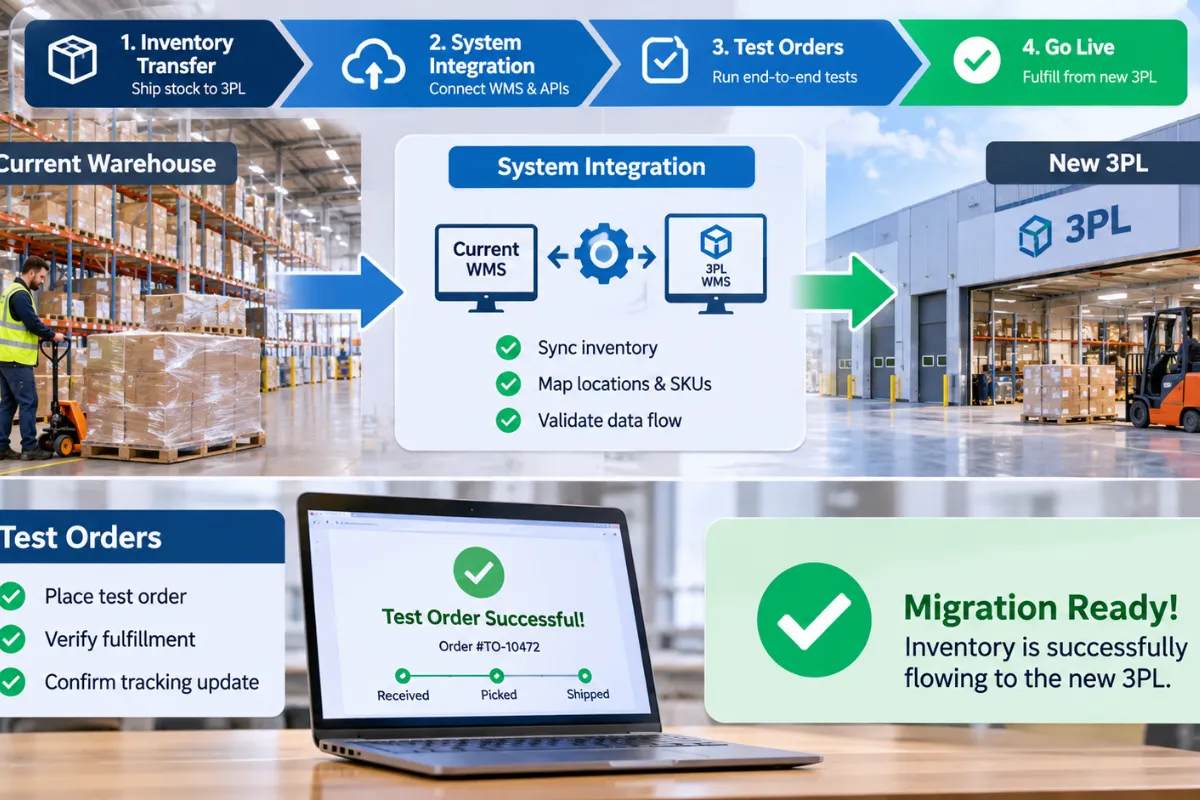
- Prepare systems and integrations. Connect the relevant sales channels and business systems. Map the data that must move between platforms, including orders, inventory levels, shipment confirmations, tracking details, and cancellations. Agree on who monitors failed syncs and how they are corrected.
- Plan inventory movement. Set out what will ship, when it will ship, how it will be labeled, and what documentation will accompany it. If moving from another warehouse, coordinate the final order-processing date, open orders, returns, and inventory reconciliation to reduce disruption.
- Validate receiving and inventory records. Confirm how the 3PL will count and inspect incoming products, report discrepancies, and make stock available for sale. Reconcile received quantities against your shipment records before relying on the new inventory balance.
- Run test orders. Test representative orders across your channels and shipping methods. Check that orders import correctly, inventory is deducted as expected, the right items are picked, packaging instructions are followed, and tracking information returns to the sales channel.
- Agree on launch criteria. Define what must be working before the operation goes live. This may include successful test orders, reconciled inventory, functioning integrations, confirmed escalation contacts, and approved operating instructions.
- Monitor the first weeks closely. Review order exceptions, inventory discrepancies, shipping performance, and invoices more frequently during the early stage. Keep a shared issue log with owners and due dates, then adjust procedures where recurring problems appear.
For businesses changing providers, a phased transfer may reduce risk when inventory and order flows allow it. Some companies move a product group or channel first, validate the process, and then transfer the remaining operation. Others may need a single coordinated cutover. Choose the approach based on inventory constraints, order volume, system dependencies, and the provider’s capabilities—not on a generic timeline.
Common Mistakes When Choosing a 3PL
- Choosing on price alone. A low rate may exclude services your business needs or come with minimums and surcharges that change the total. Compare proposals using the same operating assumptions and a realistic sample invoice.
- Relying on sales promises. Statements about speed, accuracy, and flexibility should be supported by defined processes, measurable reporting, and written commitments where appropriate.
- Ignoring peak demand. A provider may handle normal volume well but lack the staffing, space, or planning needed during seasonal spikes. Discuss peak forecasts and capacity limits before signing.
- Overlooking integration details. A platform logo on a provider’s website does not prove that the exact workflow you need is supported. Test the relevant data exchange and clarify responsibility for troubleshooting.
- Failing to check product fit. Storage and handling requirements vary. Confirm that the facility, equipment, packaging process, and staff procedures are suitable for your products.
- Skipping operational due diligence. A proposal and a sales call cannot show every detail of warehouse execution. Request a facility walkthrough, process explanations, and relevant references.
- Overlooking exit terms. Inventory removal, data access, open orders, and termination charges can become difficult issues if they are not discussed before the relationship begins.
- Treating onboarding as an afterthought. A provider cannot compensate for incomplete SKU data, unclear packing instructions, or untested integrations. Assign internal resources and treat the transition as a business project.
Final thoughts
The right 3PL fulfillment partner should make your operation more dependable, not introduce a new set of uncertainties. Look beyond the proposal headline and assess the provider’s ability to handle your products, systems, order patterns, customer expectations, and growth plans. Consistent questions, documented requirements, operational checks, and a careful review of contract terms can help you make a decision based on evidence rather than sales claims.
A good selection process also gives both sides a clearer starting point. When responsibilities, performance measures, pricing, and onboarding steps are understood before inventory moves, it becomes easier to build a productive working relationship. Explore Browse Bazaar to learn more about supply chain support and fulfillment services that may fit your sourcing and logistics needs.